

Canada is one of the world's most popular destinations for online gambling. Canadians love to gamble, and the relatively flexible legal framework plays a big part in that. But is online gambling legal in Canada?
While it is to a certain extent, there are important legal points that players need to be aware of in order to gamble safely and legally.
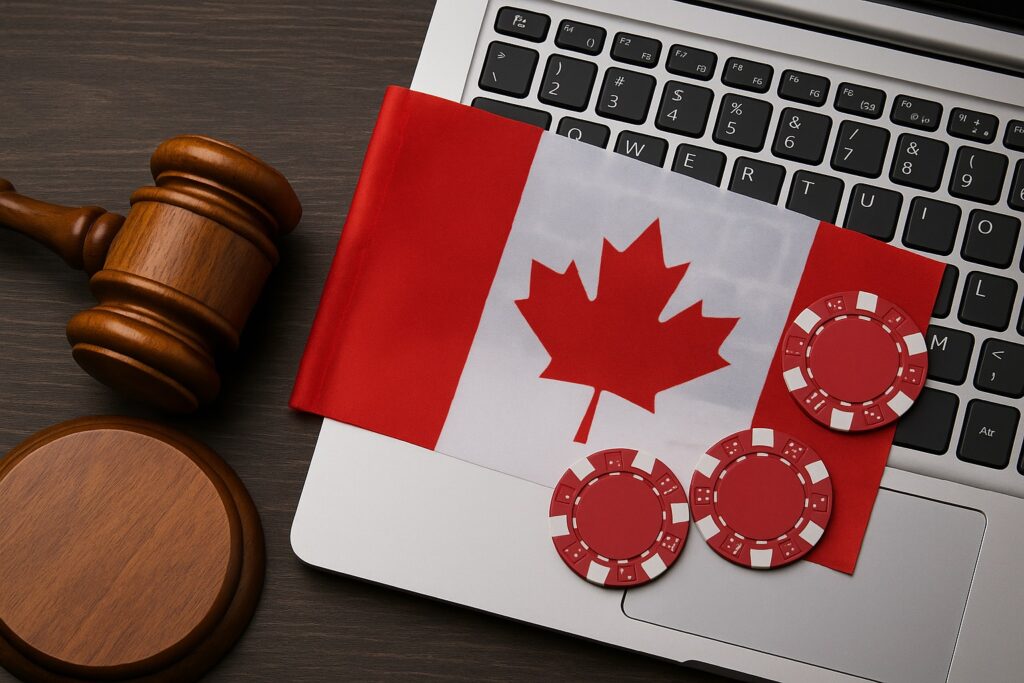
With the growing popularity of slot machines and online casinos, many foreign sites are targeting the Canadian market. Since most of them are based abroad, this can sometimes cause confusion.
In Canada, each province is free to adopt its own laws on online gambling. We will detail these rules below to answer the essential question: is online gambling legal in Canada?
We will also help you discover the best casino sites available to Canadians on JeuxDePari.
Content Overview
How Online Gambling Laws Work in Canada
Legal online gambling exists in Canada, but not at the federal level. Like the United States, Canada leaves this decision up to each province.
Ontario is currently the only province with locally regulated online casinos, although other provinces are considering following suit.
Canadian online gambling laws allow each province to organize gambling as it sees fit. Most have recognized the major economic potential of online casinos. Many provinces operate their own public platforms, which remain more limited than offshore casinos.
The majority of the best online casinos available to Canadians are therefore based abroad. They offer a wider choice of games and features, which often makes them more attractive.
Playing on these sites is permitted, as there is no Canadian law explicitly prohibiting foreign casinos.
In addition, Ontario allows third-party providers to operate, provided they obtain a local license.
However, Canadian laws are strict when it comes to gambling advertising.
Recent regulations in Ontario and British Columbia emphasize responsible gaming and transparency, now prohibiting athletes and celebrities from promoting gaming services.
The legal age for online gambling varies by province:
– 18 in Quebec, Manitoba, and Alberta;
– 19 in other provinces.
Winnings from online gambling in Canada are not taxable unless they become a regular source of income.
Canadian Laws on Online Gambling by Province
Each province and territory has its own regulatory body responsible for establishing the legal framework. Most operate public online gaming sites, which are often the only locally licensed operators.
In Ontario, online gaming rules are set by the AGCO ( Alcohol and Gaming Commission of Ontario) and iGO (iGaming Ontario).
Ontario was the first province to open its market: initially, OLG.ca was the only official provider of online casino and sports betting services (launched in 2022).
Since then, the market has expanded and now welcomes private operators, licensed by the AGCO and in partnership with iGO.
| State / Territory | Regulatory body | Official online operators |
| Quebec | Loto-Quebec | Game Area |
| British Columbia | Gaming Policy & Enforcement Branch (GPEB); British Columbia Lottery Corporation | PlayNow |
| Alberta | Alberta Gaming, Liquor & Cannabis Commission (AGLC) | PlayAlberta |
| Manitoba | Liquor, Gaming, and Cannabis Authority (LGCA) | PlayNow |
| Saskatchewan | Saskatchewan Liquor and Gaming Authority (SLGA); Saskatchewan Indian Gaming Authority (SIGA) | PlayNow (variant) |
| Nova Scotia | Nova Scotia Gaming Corporation (NSGC) | Online platform via Atlantic Lottery operations |
| New Brunswick | Gaming, Liquor & Security Licensing Branch | ALC platform |
| Prince Edward Island | Prince Edward Island Lotteries Commission | Online gaming via ALC |
| Newfoundland and Labrador | Atlantic Lottery Corporation | Online platform via Atlantic Lottery |
Are Offshore Casinos Legal in Canada?
Offshore casinos offering online gambling in Canada are very popular.
They are not part of the licensed Canadian market, but that does not make them illegal—they are simply not regulated locally.
When choosing a legal online casino in Canada, players should look for a valid license.
The jurisdictions of Malta, Curacao, and the Kahnawake Gaming Commission issue many licenses to operators that accept Canadian players.
We recommend that players consult our list of licensed online casinos in Canada to choose safe and legal operators.
The Future of Online Gambling Regulation in Canada
The Canadian online gambling market remains fragmented, but it is evolving rapidly.
New provincial regulations should soon pave the way for more private operators, as in Ontario.
Updates to the federal code should also introduce stricter rules, while the provincial licensing system will continue to expand.
The market is evolving in response to growing demand.
Over time, players will be able to enjoy legal games and betting without risking their personal data on unsecured platforms.
Conclusion
Legal online gambling in Canada and legal online sports betting in Canada continue to evolve in terms of regulation.
Many operators are keen to enter this market, which is currently managed at the provincial level.
Given the popularity of online gaming and betting, Canadian laws on online gambling will continue to evolve to enhance the security of the market.
Players should always choose licensed and secure platforms.
You will find several of these reliable operators on JeuxDePari— sign up now and play in a safe and regulated environment.
FAQ
Is Online Gambling Legal in Canada in 2025?
Yes, online gambling is legal in Canada. There are no federal laws prohibiting it; each province and territory sets its own rules and licenses.
Are there penalties for illegal gambling in Canada?
To date, no player has been prosecuted for playing at an offshore casino site. However, it is strongly recommended that you choose licensed casinos, as unregulated sites may pose risks more serious than a fine.
How Does Canada Regulate Online Casinos?
Canada delegates the regulation of online casinos to its provinces and territories.
Most have legalized online gambling, but some only allow public platforms, without opening up to private operators.
